






















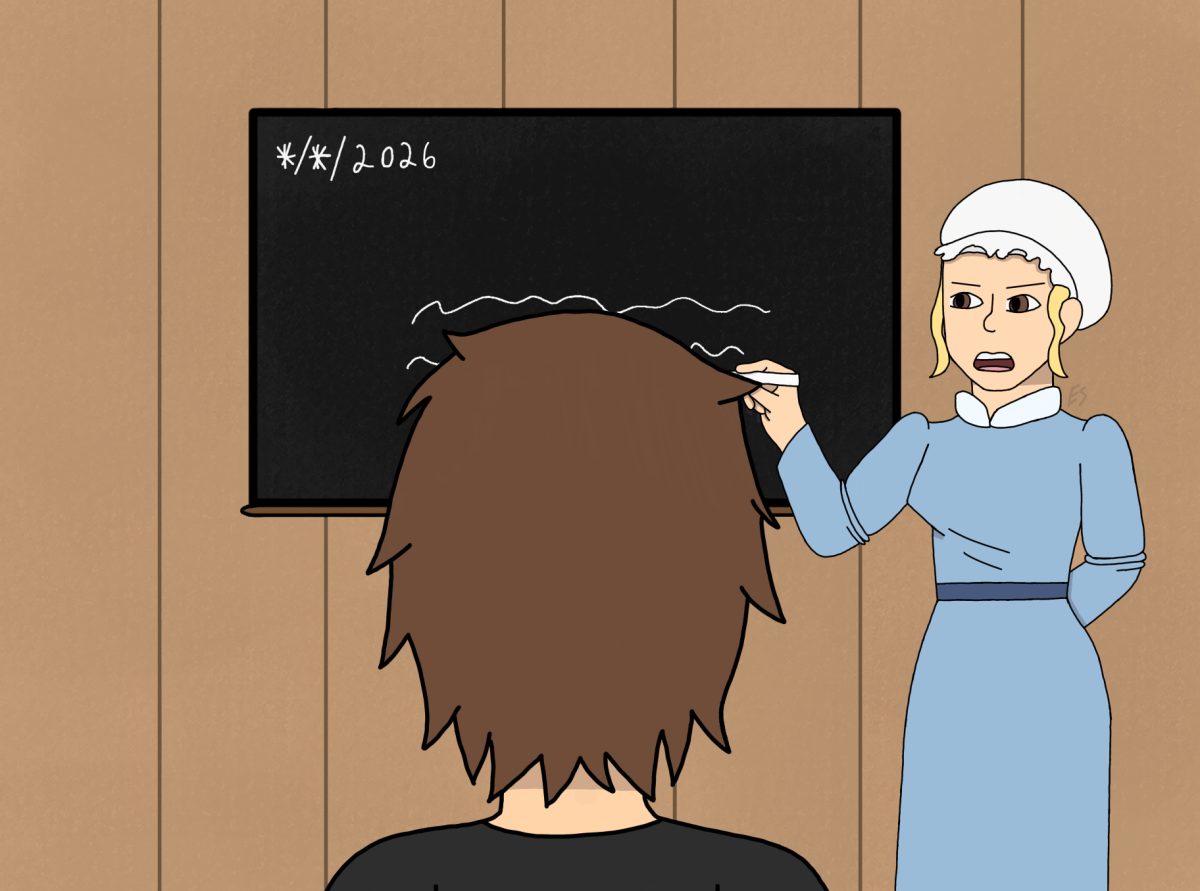
The first public school in what would become the United States of America was established in 1635. It was a boys-only, humanities-focused secondary school with a focus on preparing students for college.
Obviously, the state of education in the country has evolved substantially since then. Children of both genders go to school from age five to eighteen, with preschool giving them the option to start as early as three, all with the goal of sending them out into the world as capable adults.
Much of the basis for this current state comes from the modern Department of Education which, though currently under fire from the Trump administration, was established in 1979. This created a federal structure for the support and funding that members of Gen X, Gen Y (millennials) and Gen Z have been raised with.
Prior to this, academic funding had been primarily influenced by the National Defense Education Act (NDEA) of 1958. This was a direct reaction to the Cold War, where they aimed to encourage scientific, mathematics and language learning courses in order to make young Americans better forces to combat the USSR. Similarly, this was the period that popularized standardized testing as more people looked to create a skilled workforce, especially as the economy globalized.
While all of this is in the past, the effects left on the education system are still very present. STEM, or science, technology, engineering and mathematics courses, are still pushed and often feel prioritized, standardized testing remains a staple of the school years, and the Department of Education’s hands-off approach leaves curriculum to states.
Simply put, aside from the incorporation of technology, most American schools are the same as they were twenty years ago. However, the world as a whole is not.
Despite its global prominence, the United States has a notably weaker education system than most countries of a similar economic standing. It’s far from unlikely that the outdated nature is part of the reason why.
When compared to a well-standing education system like the Canadian one, this relation becomes blatant. Schools and curriculums have been updating and consistently changing over the past few decades. They adjust to cater to those who want to go into the work force, immigrant populations and those seeking life skills while also continuing standard learning. Some provinces have also opened up options for different and greater teacher training.
Changing with the times is how people, animals and industries survive. While it may seem impossible to keep up with the rapidly shifting world of today, that’s a weak excuse to instead remain stagnant, especially at the harm of future generations.
America has a duty to its children, one that can only be fulfilled by an education system that allows and encourages evolution over clinging to the past.