



























Consumerism is a theory that refers to the growing need for members of a society to consume goods. While it is the main driver of the economy in the U.S., it has major drawbacks towards the environment and the future.
The concept of a consumer society began in the 1920’s United States as the spending power of the middle class grew. People have always been consuming; it’s necessary to survive. However, in the past, the general public didn’t have money to spend on unnecessary products like fancy outfits or little trinkets.
We all partake in consumerism, even if it feels like we don’t. With the way society is set up, it’s impossible not to. But at what point does it become too much?
According to the EPA, 292.4 million tons of waste were produced by Americans in 2018, and 146 million tons–or 50%–of that ended up in landfills. These landfills create an excessive amount of methane gas, one of the largest contributors to climate change.
Additionally, many landfills are poorly regulated, with a reported 230 (21%) of them not meeting environmental standards in 2023. As overconsumption of nonessential products continues, these landfills will continue to fill and cause pollution.
A huge contributor to the rise of consumerism is social media. Something will go viral on Tiktok or Instagram and then, all of a sudden, everyone has to have it. For example, recently Tiktok has popularized Labubus.
The rise of Labubus has resulted in mass production of many fake versions referred to as “Lafufus.” These off-brand variants are in stores everywhere in all shapes and forms. There’s Labubu pillows, stickers, phone cases, and so many more.
These furry keychains are made up of synthetic materials that can take hundreds of years to decompose, disrupting natural nutrient cycling. Additionally, harmful plastics are used for the packaging of Labubus.
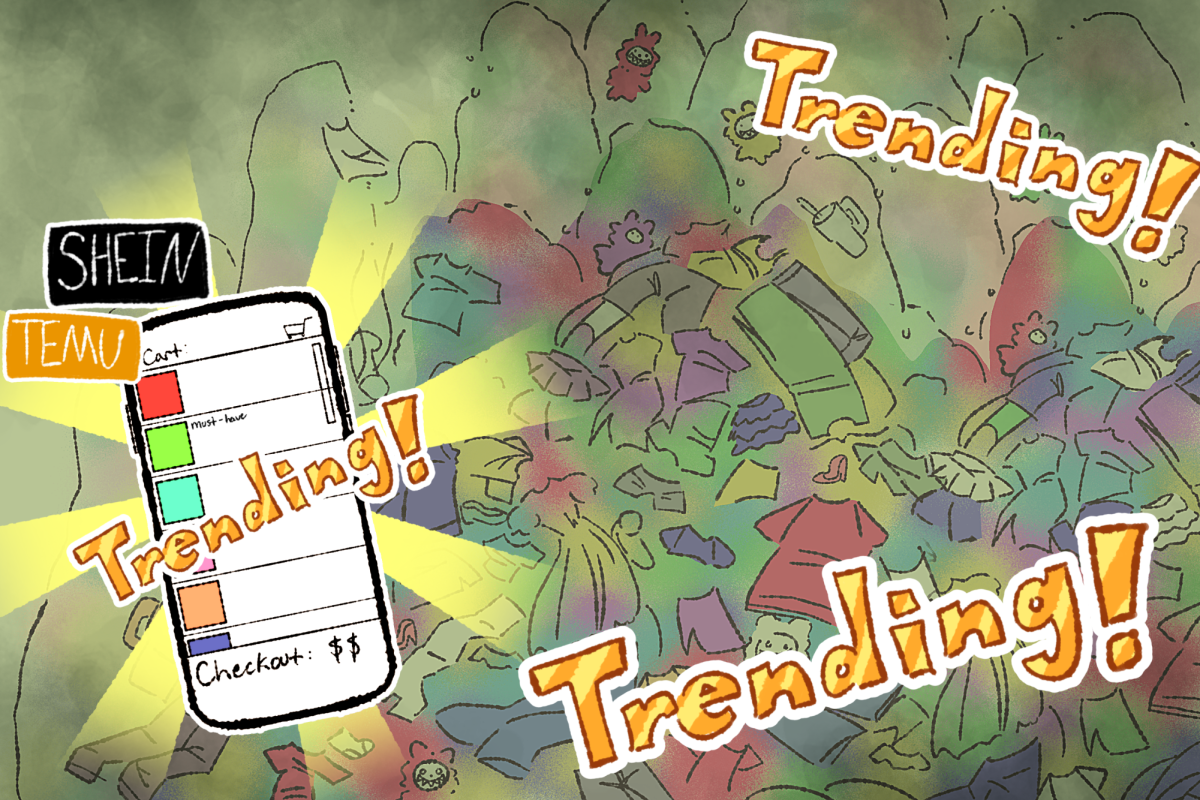
The internet has also created and rapidly increased the number of micro-trends. Micro-trends are extremely short lived trends, only lasting about a month and influencing people to buy unnecessary clothing and accessories to follow a specific aesthetic.
These trends are fueled and taken advantage of by fast fashion brands such as Shein and Temu. Companies will see something go viral and immediately mass produce low-quality clothing that matches whatever is trending.
With how quickly trends cycle through, these clothes are likely only being worn a few times before being thrown away and contributing to environmental degradation. It seems like every month there’s something new that everybody just “has to have.”
Overall, society isn’t powerless against overconsumption and there are many small lifestyle changes people can make to help diminish their environmental impact. The first step is to acknowledge rapid-paced trends are unnecessary and think before we buy. Change doesn’t happen right away, but if everybody recognizes that the current state of consumerism is unsustainable, people can make way to start finding solutions for this issue.