


























Artificial Intelligence has been normalized to the point that people often forget what it costs to function. After all, AI doesn’t just come out of nowhere. It has a power source, that source being our very own planet.
AI is used by 66% of the world’s population every day for various purposes. From solving problems, making entertainment, and even taking over people’s jobs, it seems AI can do it all these days. However, do people ever consider the drawbacks that may come from a tool with inhuman capabilities?
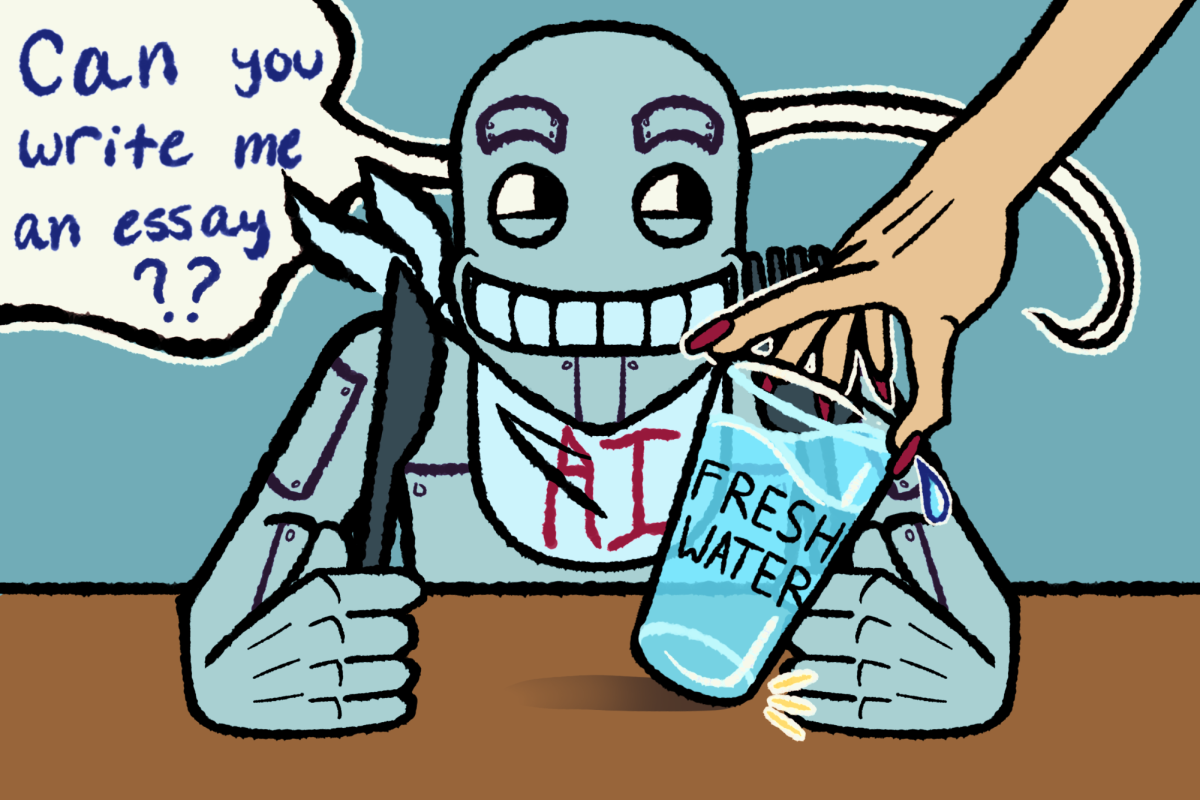
One of the biggest problems with Artificial Intelligence is how much water its servers consume in order to function properly. Due to how advanced AI is nowadays, its servers often overheat, therefore requiring water to cool them down. As this liquid heats up from the servers, it evaporates and more water needs to be added to keep everything running properly.
Google’s data centers in only the U.S. are estimated to have used roughly 12.7 billion liters of water in just the year of 2021. With available drinking water being scarce in many places in the world, this liquid usage is a huge problem, endangering both the environment and everyone living in it.
Only 3% of Earth’s water is freshwater, the water necessary for human survival, and only 0.5% of all water is accessible and safe for human consumption. Is AI really worth exhausting the limited H2O humans are able to thrive off of?
In addition to the water problem, pollution has also become a worry. E-waste, discarded parts and/or radioactive materials, are produced with the continuous use of Artificial Intelligence. This waste is often dumped into the ocean or piled up on the Earth’s surface.
According to studies, e-waste is expected to reach a total of 1.2-5.0 million metric tons by 2030 if AI computers and systems are continuously used like they are today. E-waste makes up roughly 70% of the radioactive waste found on Earth today and yet only 12.5% of it is actually recycled.
Another factor to consider when choosing Artificial Intelligence is the massive amounts of energy it takes just to power the servers and advance its technological capabilities. In 2023 alone, AI data servers consumed roughly 4.4% of U.S. electricity, a number that is expected to double by 2028. That immense amount of energy is also putting a strain on power grids that can cause power outages for businesses.
Moreover, that energy usage is also greatly contributing to the accelerated climate change people see today. Greenhouse gas emissions come from the heavy use of fossil fuels that create the energy AI is consuming. All the while, many people remain oblivious, still demanding more from Artificial Intelligence and therefore the environment as well.
Consider the financial costs as well. Just to maintain AI models for a year, the cost falls around 1-4 billion dollars, with even off-the-shelf models costing 200,000 dollars a year. These AI systems are requiring massive amounts of money that could be going towards something of better cause.
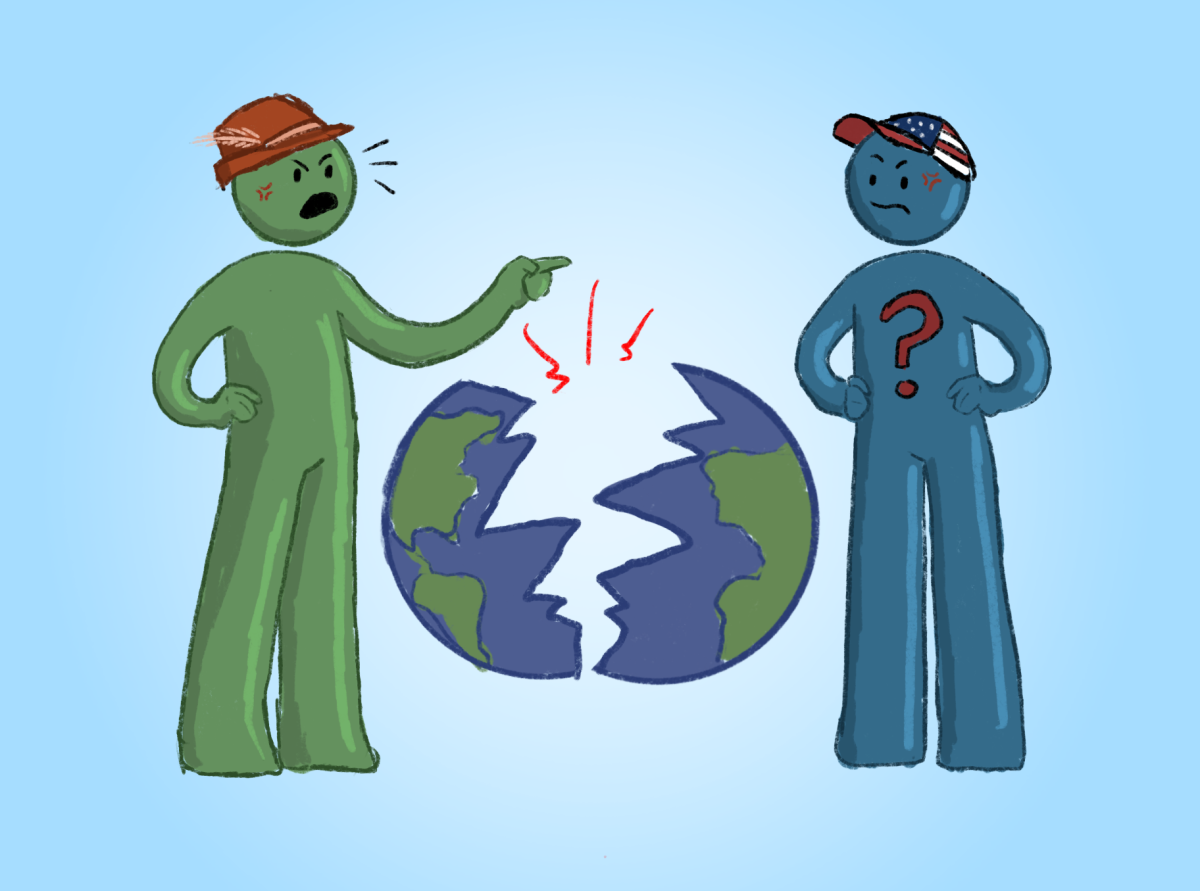
With all of that being said, is Artificial Intelligence still worth it over the wellbeing of the planet? So, while yes, AI makes people’s everyday lives easier, would that be worth reducing the planet to a dead husk of itself? Will that matter when a worldwide water scarcity becomes a reality?
No, it won’t.
With all of the major negative impacts AI has on the Earth, it is only right that we as humans take a step away from that technology and focus on the alternatives. Artificial Intelligence is a massive source of information but so are books and information created by humans. Afterall, AI is programmed with the knowledge of humans, and therefore can be substituted for real sources also made by them.
Additionally, the entertainment that AI provides can also be easily replaced with things like television, books, and games. With AI being presented right in front of the faces of the modern-day people, it becomes incredibly easy to overlook the safe and simple options that are also available.
Though, to really make a change, not just a few people need to stop using Artificial Intelligence. Everyone is necessary for the survival of our planet and the species, including us as humans.
When you imagine your future, do you want to see the Earth flourishing with life of all different kinds, where the oxygen is safe to breathe and the water is safe to swim in and drink? Or do you see a dark and grey Earth, sucked of all its resources until it is dry and broken?
These are the questions people need to ask themselves every time they go to AI for another task that could be handled in a better way; the right way.