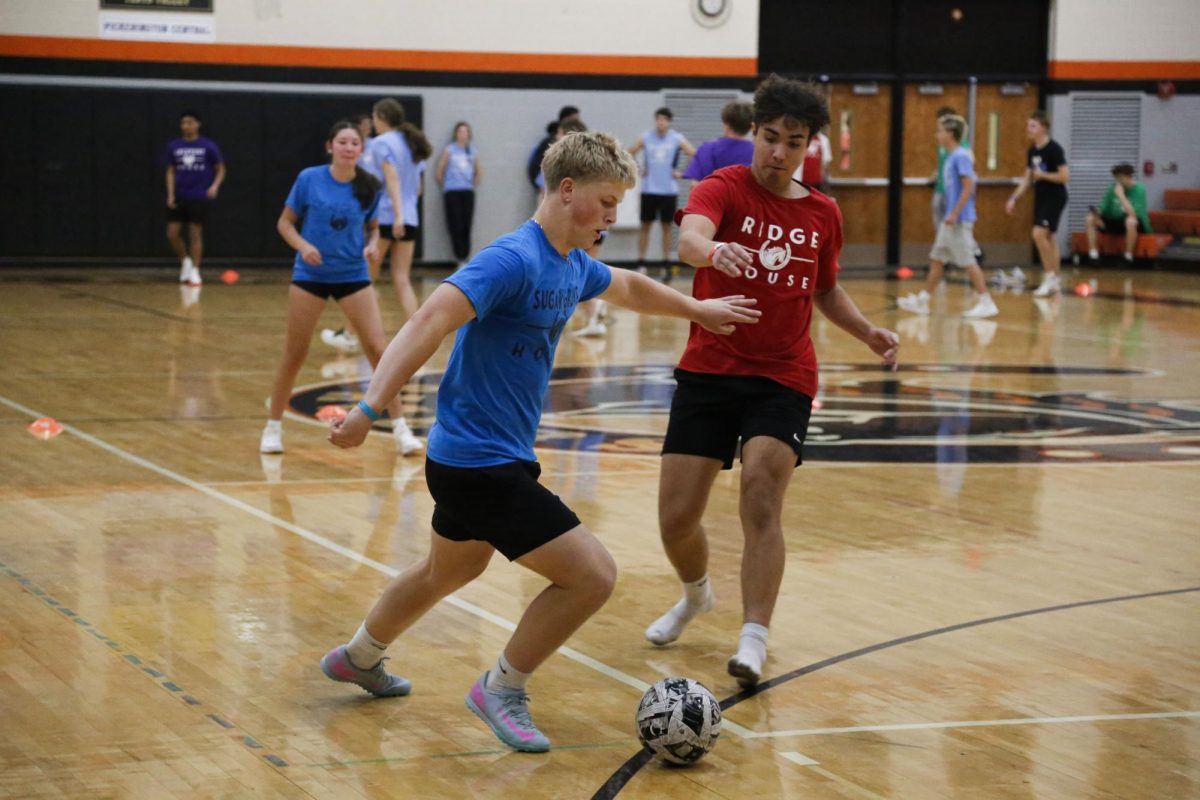
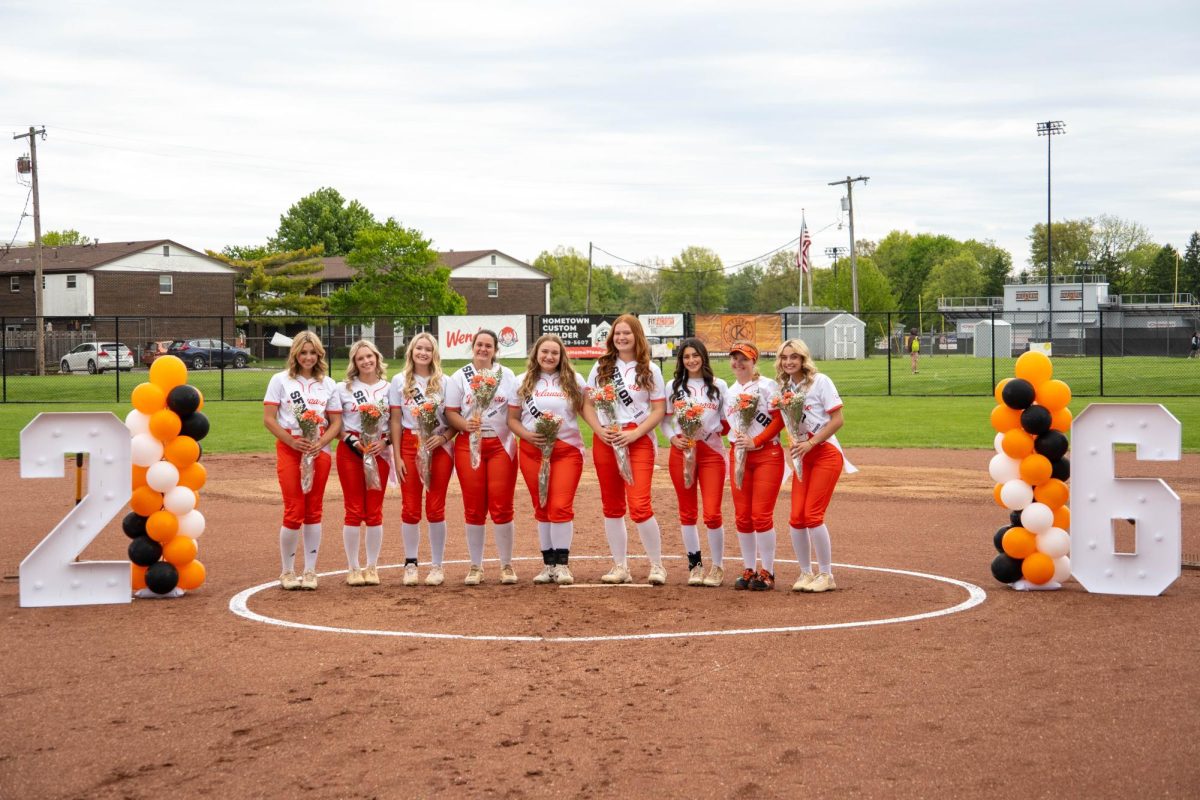

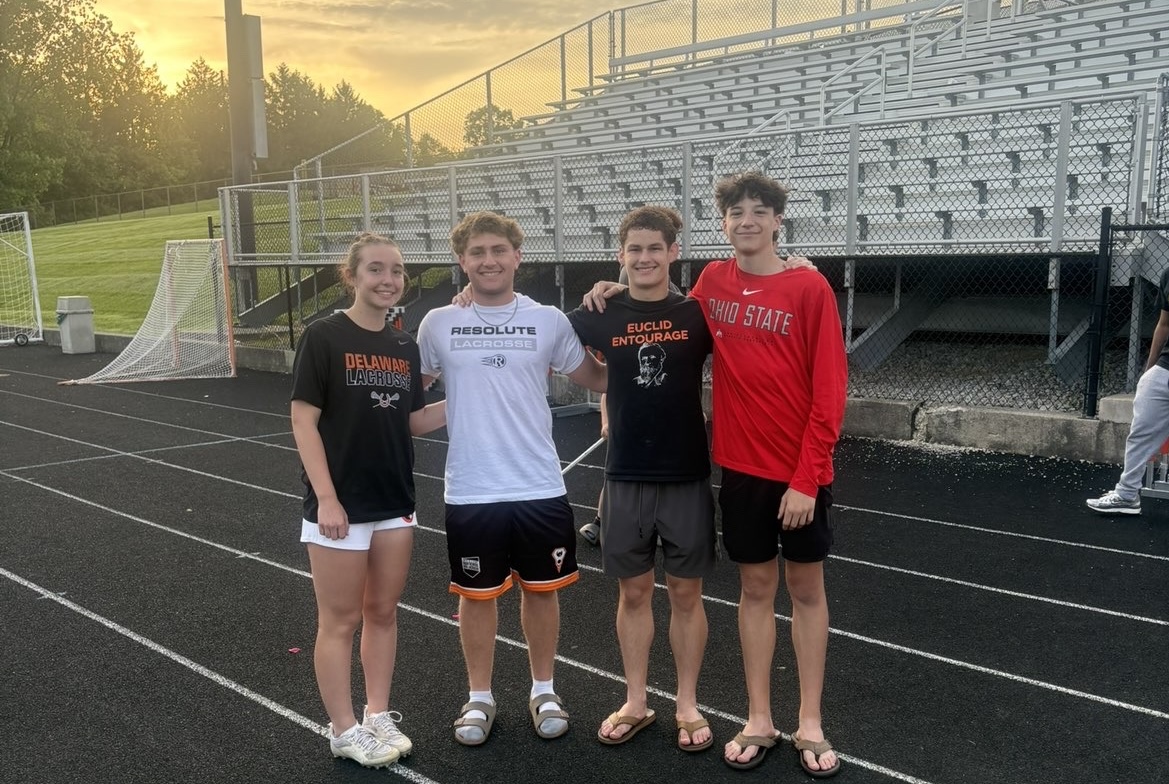


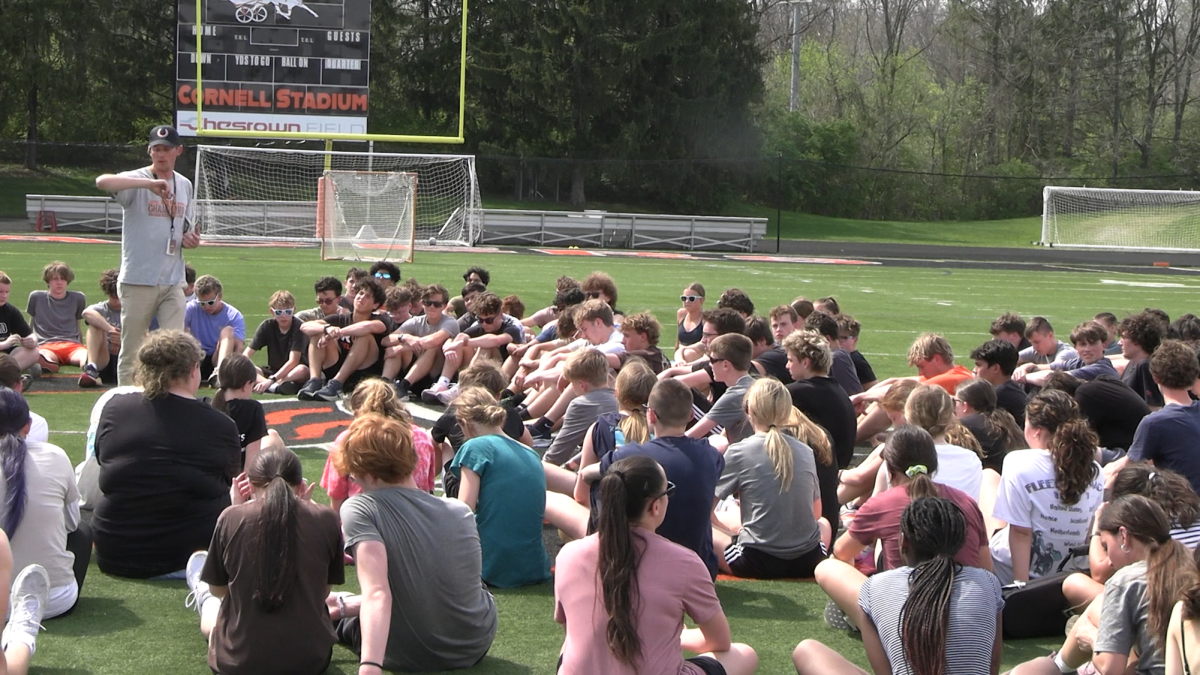

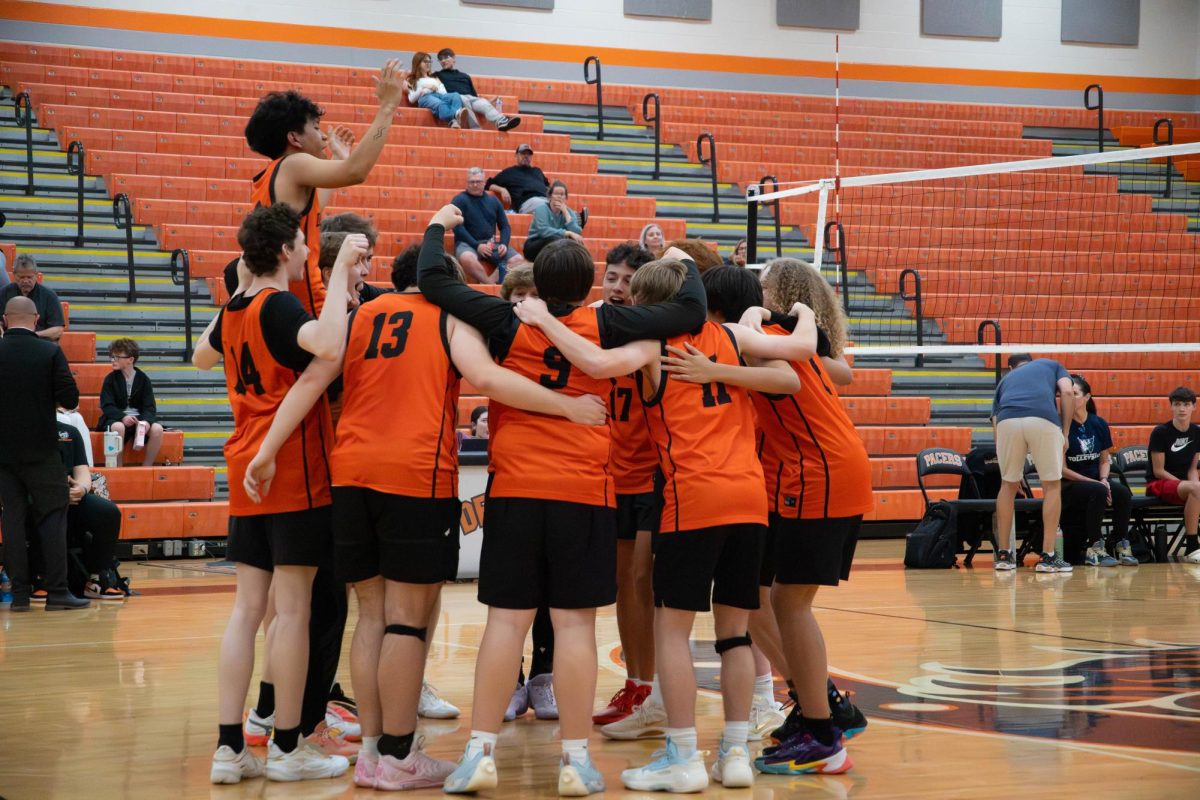






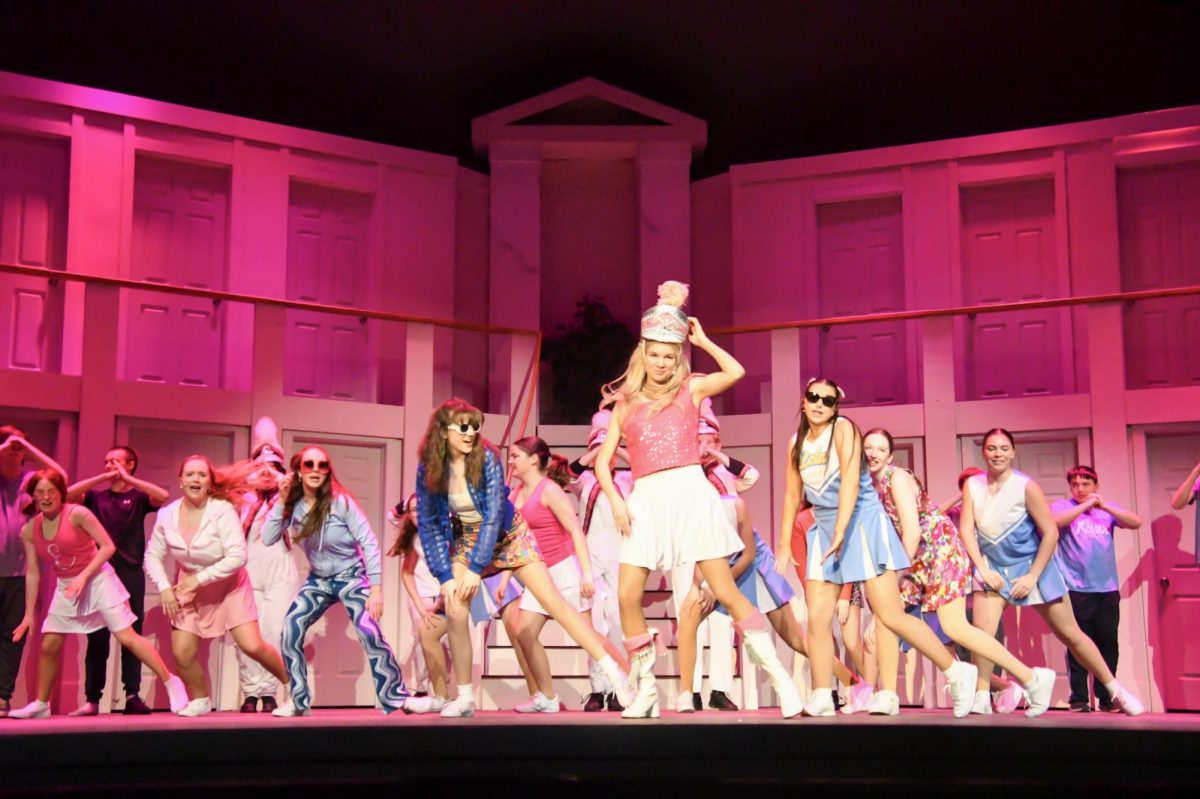


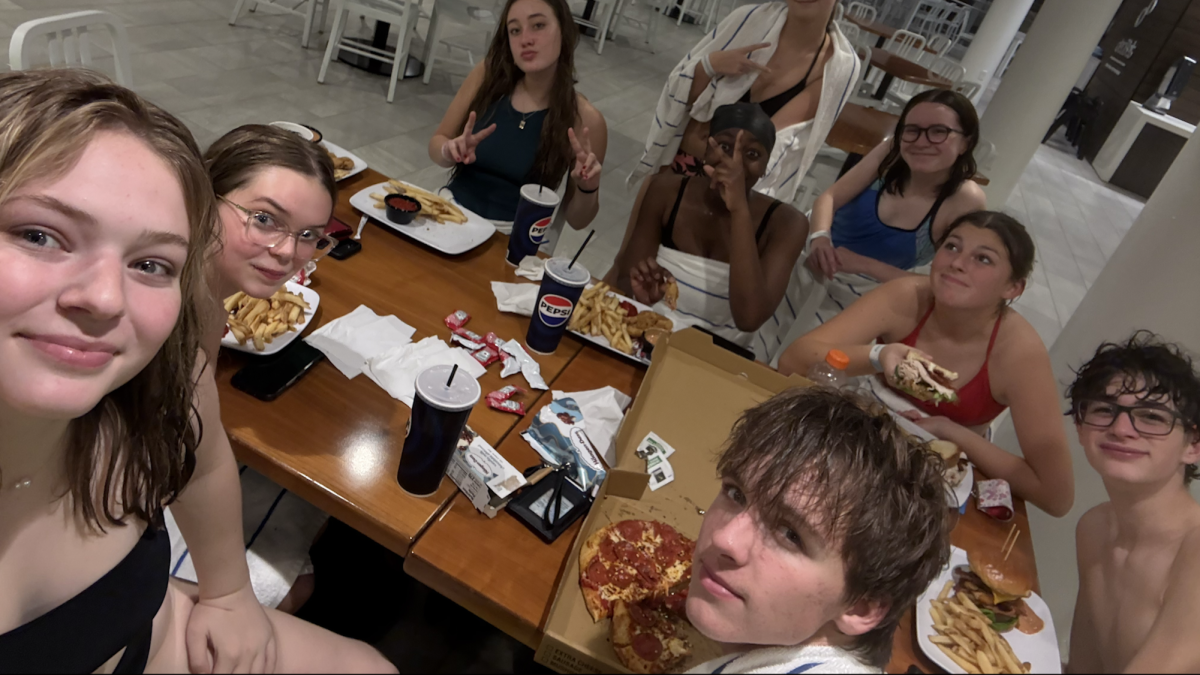


Recently, the Fulton Creek Falcons bulletin board was reworked and decorated with images of the House’s students and faculty taken during several competitions that have happened so far this year. Prior to that, however, the bulletin displayed AI-generated images of the House advisory teachers – as well as a colorful array of protesting sticky notes.
At the beginning of the year, Fulton Creek co-dean Emily Gilles had planned the original decoration of the board to be a fun activity that included the students of her House–an AI competition.
“[The idea] actually came after I tried to use Gemini, which is the AI that our district was promoting for us to use,” Gilles said.
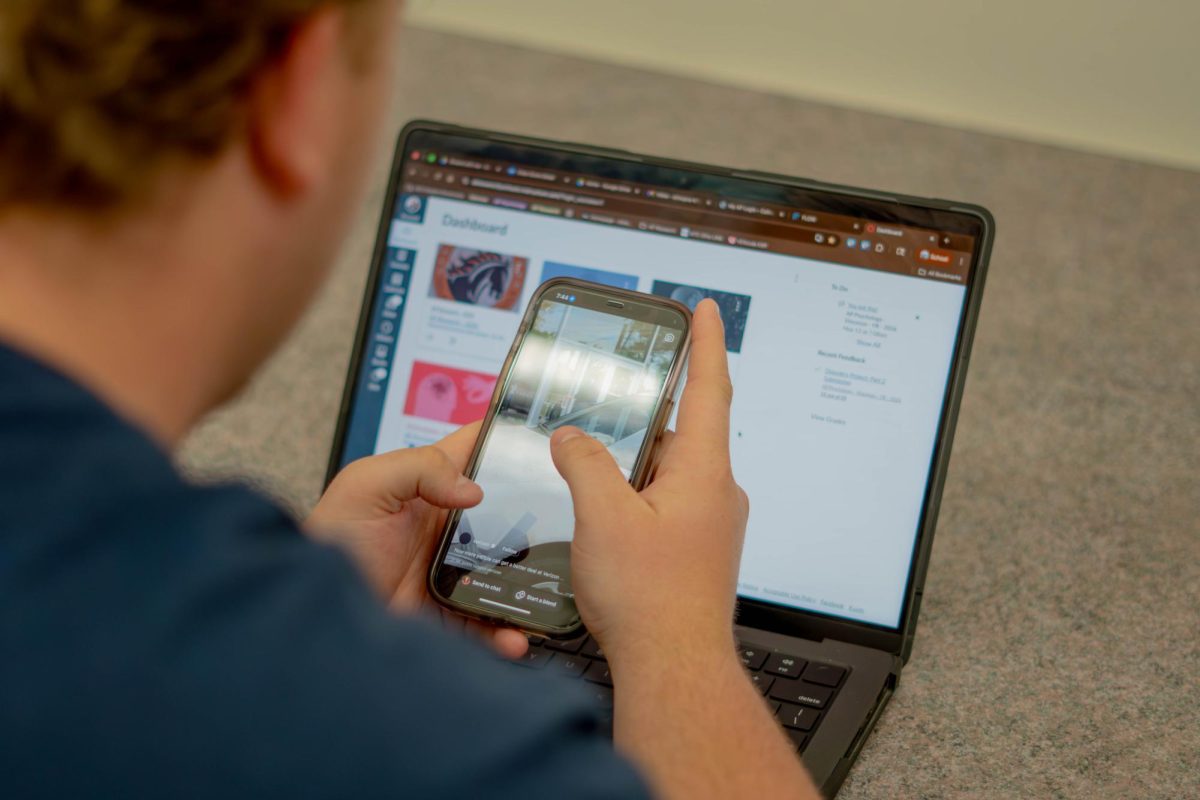
With the recent AI integration into Hayes, the faculty were encouraged to fuse some AI into their curriculum and classes. While House isn’t exactly part of the normal Hayes curriculum, this competition could be seen as a product of that introduction.
In this case, Fulton Creek students were instructed to generate images that combined photos of their advisory teachers with photos of falcons, to represent their House mascot.
Gilles said the activity was created after trying to integrate generative AI in her lesson plans for her English classes.
“[Using Gemini, I had] tried to make a subordinating conjunctions poster… [and if] you read it, it says [gibberish]… [instead of] subordinating conjunctions,” Gilles said. “So that was kind of the inspiration for ‘okay, if it creates words with gibberish, what would it do if it took our pictures?’”
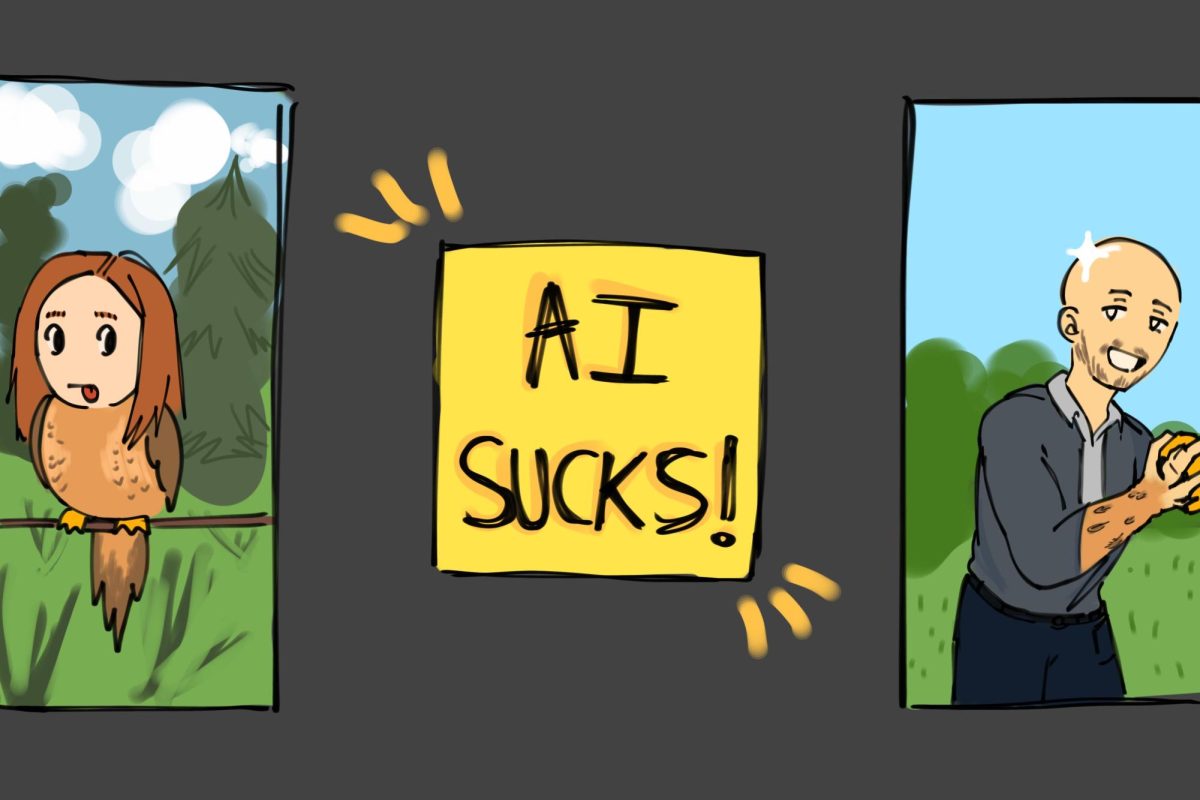
The result, while not entirely gibberish like the English grammar lesson she created, still missed its mark. Many of the advisors in their AI photos lost key features, or turned into eagles or other birds instead of falcons. However, Gilles said no immediate criticism was directed toward the project.
That was not the case for long, however, as noted in words from senior Marty Howard.
“I saw it, and I… immediately [was] kind of taken aback, because it [looked wrong]. I looked at it again like, ‘oh, because it’s AI’,” Howard said. “I know artists who are in Fulton Creek… [and] it could have been such a fun project to [include]… all the art kids [and] collaborate together [on the board].”
Alongside Howard, a handful of students had anonymously placed sticky notes all over the old board, writing things in protest of the generative AI usage. Likewise, another one of these people was senior Roman Jones.
“I’m super against AI,” Jones said. “I feel like it’s bad for the environment… and I feel like its recent integration at Hayes has been taking away from the student experience and making students less involved [in general].”
Some of the notes on the Fulton Creek bulletin board specifically referred to the negative environmental impact of using generative AI, specifically its water usage Generative AI tools use large amounts of water to keep their equipment running, and Gemini, the program used at Hayes High School, is recorded to use around 0.26mL of water for an average prompt, usually for cooling purposes.
Additionally, Google Text Search prompts are estimated to use approximately 650,000 liters in a day. This is nearly the same as a town of around 10,000 people.
Facts like these were commonly cited in some of the notes.
“I was kind of proud of the little sticky notes that students were putting up,” Gilles said. “I think [that the students] went about it in a really great way… instead of defacing or ripping down [the board]. I hope that this can spark dialogue about AI.”
The notes were used as a form of anonymous, peaceful protest. With the sticky notes, the students placing them had done so with a hope of conveying those intentions and messages; that the usage of AI could’ve been many other things, and they did not agree with the source of the board’s content.
“I know that the district has had AI training and things to be able to use it for resources for different [things]… but I’m not entirely convinced that that’s the way I’m going to take my classroom,” Gilles said.
The bulletin board has since been replaced with new content.
“I wasn’t sure if [it was taken down] because of anything we did, or if it was just because… they were trying to put something else up,” Jones said. “[But] I like what they’ve done with it now, where it’s just photos of real people doing real things… like what the other Houses have already done in the past.”
The change has received praise rather than criticism as of now, and no new notes have been placed on the board.
“I hope the school will stop pushing AI… [and] I’m glad that they changed [the board], that’s for sure,” Howard said.